Fully Trained, Certified, & Experienced Search Dogs
CCSAR maintains dogs certified in multiple disciplines appropriate for the requests received in this region.
This includes woodland and other area searches, trailing, work involving bodies of water, and human remains detection.
Training is conducted in a manner consistent with standards of police work dog organizations
CCSAR dog teams are certified by police work dog association Master Trainers or retired Master Trainers/equivalent. These dog/handler teams have met standards adopted by CCSAR which are based on SAR standards accepted throughout the United States.
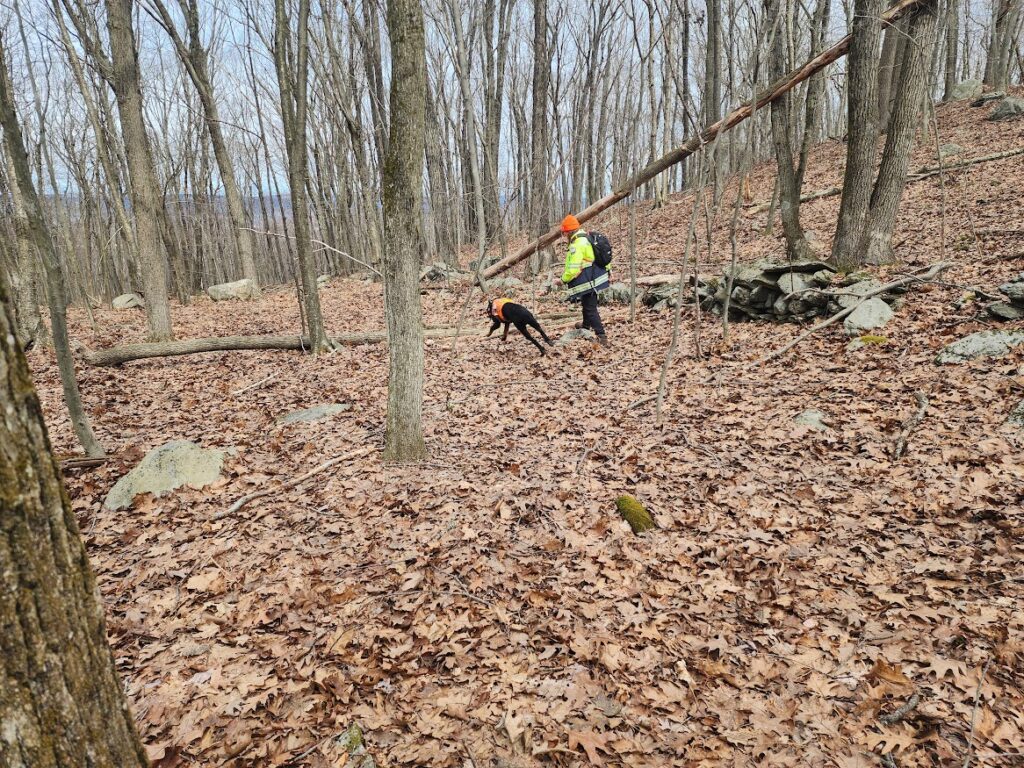
Wilderness Air Scent
Canine teams search forests, parks, and remote terrain for lost hikers, hunters, children, or vulnerable adults.
Airscent dogs are trained to search off-leash, accompanied by their handler and support team, and do not require a scent article such as clothing to identify the missing individual. They must be capable of moving off-trail, navigating rough terrain and poor weather for long periods, all while ignoring distractions like wildlife, people, and unusual sounds. Searching independently allows them to cover far more ground than if they stayed close to their handler—making them highly effective assets during a search.
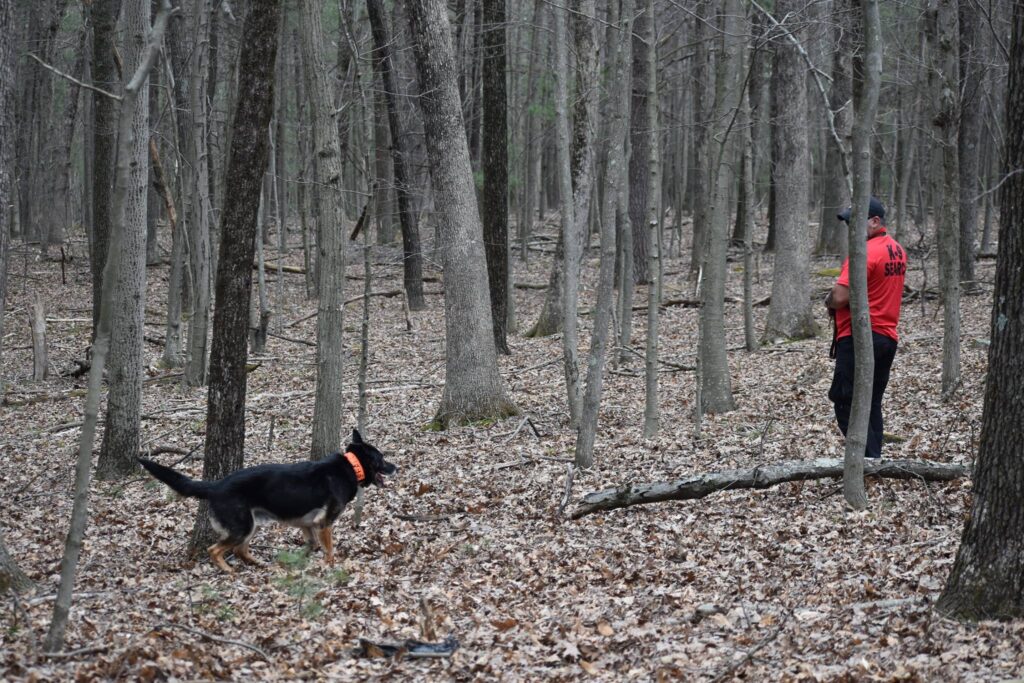
Human Remains Detection
Canine teams locate deceased individuals on land, including surface and buried remains.
After death, the body moves through several stages of decomposition, each releasing a changing mix of volatile chemicals. Human Remains Detection dogs are trained to distinguish human scent from that of wildlife remains they may encounter during a search. Different sources—such as tissue, fluids, and bone—create their own scent profiles, influenced by both the environment and the amount of time that has passed. Bone, however, breaks down the slowest, and skilled search dogs can locate even buried or dried bone fragments long after all other physical evidence has disappeared.
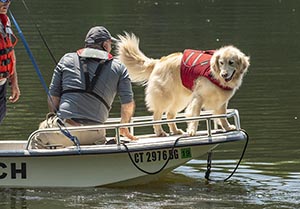
Water Search
Canines will detect human scent rising through water from submerged remains using boats or shoreline operations. Divers will assist with recovery.
As human remains break down, many of the gases produced rise through the water and drift into the air. During water searches, HRD dogs are trained to work from the bow of a small boat or patrol the shoreline on land, using these airborne scent traces to pinpoint potential locations. When a dog alerts, divers then conduct a focused, detailed search of that area. This approach allows large bodies of murky or low-visibility water to be covered far faster and more effectively than relying solely on divers performing a grid search.
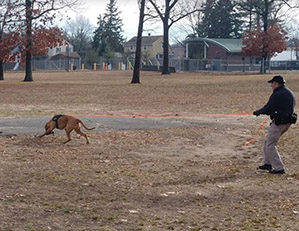
Trailing
Uses a subject’s scent from a last known location to follow their path, or to determine a direction of travel. Useful in both wilderness and urban settings.
Trailing dogs track the path a particular person has taken—whether in cities, neighborhoods, rural areas, or the backcountry—by separating that individual’s scent from the smells of everyone else. These dogs are especially useful for identifying a subject’s direction of travel and are well suited for work in populated or high-traffic locations. Unlike airscent dogs, which search for any live human, trailing dogs are focused on just one person, following the unique chemical signature every individual leaves behind. To begin, the team must receive a “scent article,” such as clothing, that carries the subject’s odor.